Where LLMs Get Their Facts: Mapping the Citation Graph Behind AI Brand Mentions
Key Takeaways
- AI answers about your brand draw on many sources, most of them not your own.
- Engines trust independent sources to verify what brands say about themselves.
- The citations in real answers show which sources matter in your category.
- Fix your own description first, then build presence on the sources engines already trust.
Many teams assume that improving their own website is enough to change what AI assistants say about them. It helps, but it is rarely sufficient. When ChatGPT, Perplexity, Gemini or Claude describes a brand, it usually blends many sources — and most of them are not yours.
This guide maps those sources, explains how to find the ones that matter in your category, and sets out a plan for building presence beyond your own domain.
Where do LLMs get information about brands?
From two places: what the model learned during training, and the pages it retrieves live when answering a question.
Training knowledge is broad and slow to change. Live retrieval is narrower and faster: the engine searches, pulls a handful of pages, and builds its answer from the clearest, best-corroborated passages. Both layers draw on the same wider web — the citation graph around your brand. For the retrieval mechanics, see LLM SEO.
What does the citation graph look like?
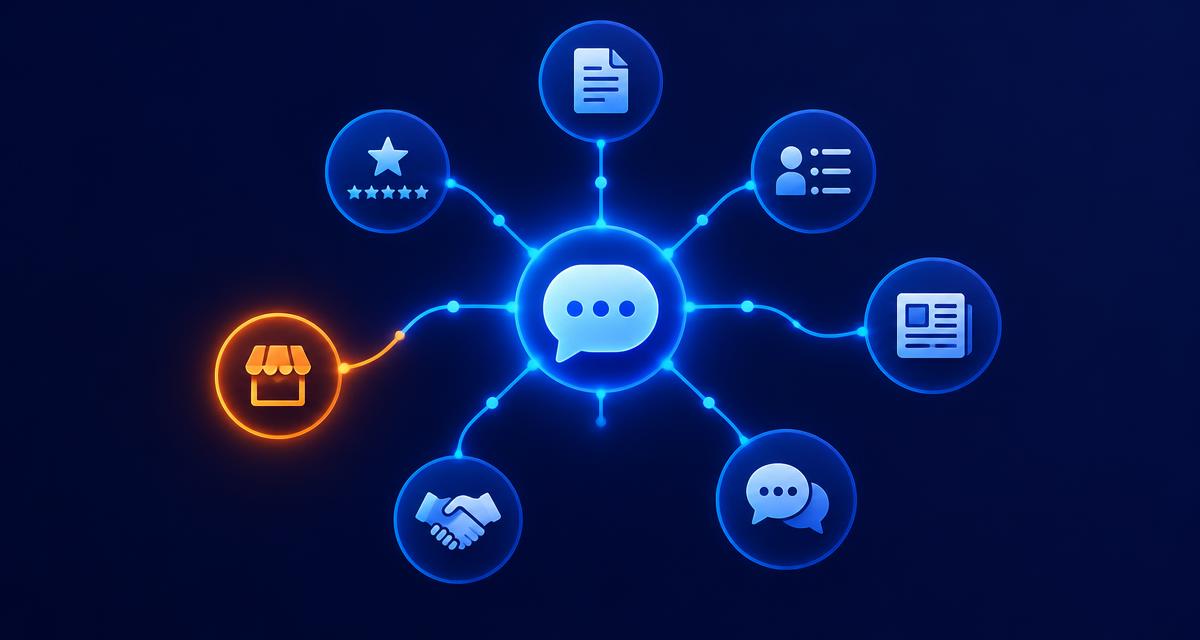
It is a set of source types that AI engines repeatedly cite, each carrying different weight for different questions.
The sources behind AI brand mentions
| Source type | What engines use it for | What good looks like |
|---|---|---|
| Your own site | Definitions, products, audience, facts | Clear, consistent, plain-text answers and structured data |
| Review platforms | Customer experience and comparisons | Current, accurate profiles with recent reviews |
| Directories and marketplaces | Category membership and basic facts | Complete listings in the right categories |
| Media and analysts | Credibility and market position | Coverage that states what you do and for whom |
| Communities and forums | Real-world opinions and recommendations | Genuine, helpful participation by your experts |
| Partners and integrations | Ecosystem fit | Accurate partner pages and joint listings |
Why isn't optimizing my own website enough?
Because engines trust what independent sources say about you, and use them to check what you say about yourself.
If your site says one thing and review profiles, directories and articles say another, the engine has to pick — and it often favours the independent version, even when it is out of date. Brands that are missing from third-party sources can be absent from answers entirely, however good their own pages are.
How do you find which sources matter in your category?
Read the citations in real AI answers to the questions your buyers ask.
- Run a fixed set of persona-based buyer questions across the four major engines.
- Record every cited domain, and note which brands each one mentions.
- Rank sources by how often they appear and for which question types.
- Check how you appear on each: missing, outdated, inaccurate or strong.
Perplexity shows sources openly; other engines vary by mode, so repeated runs matter. Our guide to tracking AI brand mentions explains how to capture this consistently.
How do you build presence across the citation graph?
Fix your own description first, then work outward through the sources the engines already trust.
- Set the canonical description. Two or three sentences on category, audience and difference, used everywhere.
- Correct what is wrong. Update stale profiles and listings that engines are citing today.
- Fill the gaps. Earn presence on cited sources where competitors appear and you do not.
- Earn independent coverage. Contribute expertise to the publications and communities your buyers read.
- Measure again. Re-run the same questions to see which changes moved the answers.
Where should a marketing leader start?
With a citation map: the sources behind your category’s AI answers, and where you stand on each.
That map shows where effort will change answers, and where it will not. For the executive scorecard that tracks the result, read The CMO’s Guide to AI Brand Visibility; for vendor shortlists, read How to Get Recommended in AI Product Comparisons. BrandOptics builds this as an advisory engagement — see our services, explore AI brand tracking, or talk to our team about a Full-Footprint Citation Strategy.
Frequently Asked Questions
Related Posts
What Is GEO? Generative Engine Optimization Explained for Marketing Leaders
A plain-language guide to generative engine optimization: what GEO is, how AI engines choose which brands to mention, and how to start.

AI Search Optimization: What Search Demand Says About Where Marketing Is Heading
What Semrush search data reveals about AI search optimization — how much demand exists, what marketers are asking, and what it means for budgets.

How to Improve Your Brand's Visibility in AI Search Engines
The five strategies that move brand visibility inside ChatGPT, Gemini and Perplexity — in the order that actually works, and how to measure the change.
Ready to See What AI Says About Your Brand?
Get a comprehensive assessment of your AI brand visibility and a clear action plan.